The Real Role of IT in Retail Operations Today
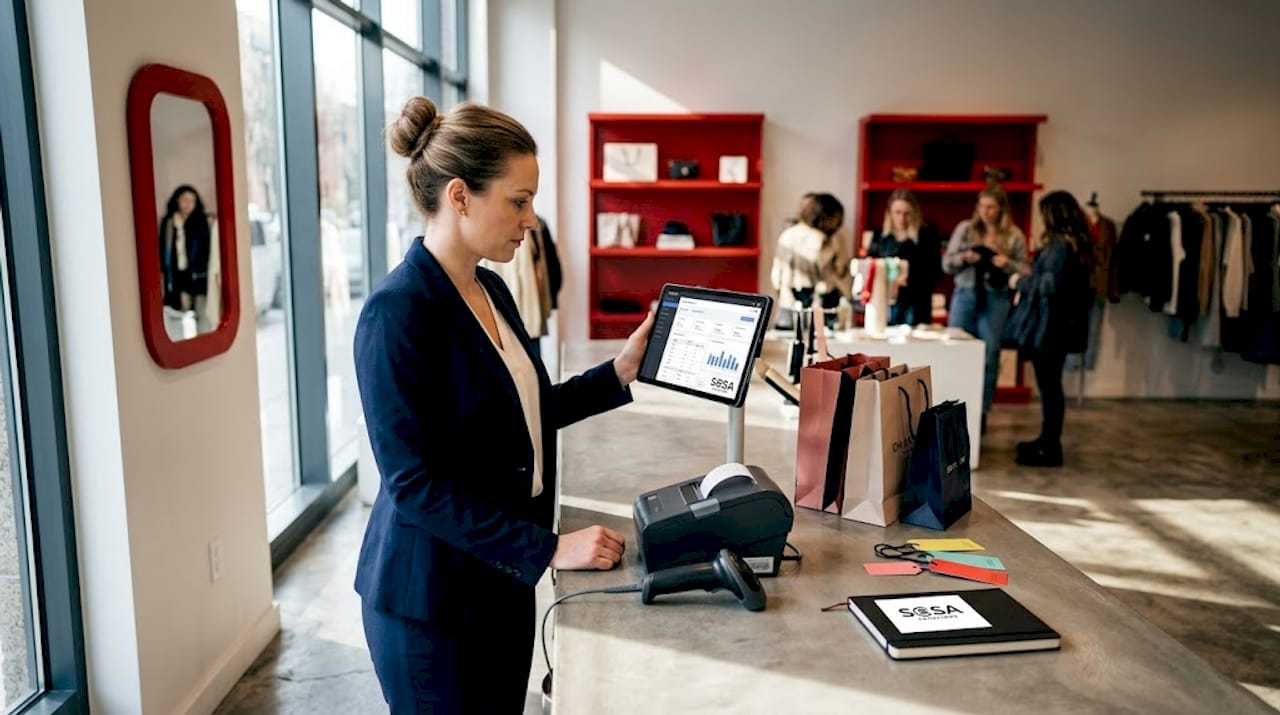
Most retail managers treat IT as a cost center. Something you call when the register freezes or the Wi-Fi goes down. That framing costs you more than any IT budget line ever will. The role of IT in retail operations has shifted from background support to front-line business driver, shaping everything from how you manage inventory to how quickly you can respond when demand spikes unexpectedly. This article breaks down where IT actually creates value in retail, what the smartest operators are doing differently, and how you can apply these ideas without needing a CIO on staff.
Table of Contents
Key Takeaways
Point | Details |
IT drives core operations | Inventory control, POS, and logistics all depend on integrated IT systems to reduce errors and cut costs. |
AI adoption is accelerating fast | 90% of retail executives expect AI to outpace traditional search by 2026, making early adoption a competitive advantage. |
Legacy systems still have value | Integrating older platforms with modern tools unlocks real-time data without scrapping existing infrastructure. |
Fragmented IT wastes money | Disconnected systems limit AI readiness and obscure data flows, reducing your return on technology investment. |
Governance determines ROI | A shared architectural foundation and clear IT strategy separate retail winners from those spinning their wheels. |
The role of IT in retail operations: core systems that actually run your store
Think of your store as a machine. The people are the moving parts. IT is the wiring. Without it, nothing connects and nothing runs on time.
The foundational IT systems that link product availability, experience, and operations include:
Inventory management systems. These track stock levels in real time, trigger reorders automatically, and flag discrepancies before they become shortages. A mid-size grocery chain running manual counts might catch a stockout three days late. An integrated inventory system catches it before the shelf is even close to empty.
Point of Sale (POS) systems. Modern POS platforms do far more than process transactions. They capture customer purchase data, feed sales trends into your forecasting tools, and connect to loyalty programs. Every swipe is a data point.
Demand planning tools. These pull sales history, seasonal patterns, and sometimes even external data like local events or weather, to project what you need and when. The result is fewer markdowns and less money tied up in dead stock.
Logistics and supply chain software. Route optimization, vendor communication, and delivery tracking all run through IT. A single delay caught early by an integrated system can prevent an empty shelf during your busiest weekend.
The IT impact on retail becomes obvious when any one of these systems fails. The reverse is also true. When they work together, managers spend less time firefighting and more time making decisions that actually grow the business.
AI and unified platforms: the shift retail managers need to understand
Here is where the conversation gets more interesting, and where most retailers are leaving real money on the table.
Traditional retail tech stacks look like a collection of tools that vaguely talk to each other. You have one system for inventory, another for scheduling, another for reporting, and a manager who spends half their day copy-pasting data between them. That is not technology in retail management. That is technology working against retail management.
The shift happening right now is toward unified, AI-driven platforms that consolidate these functions and automate the manual work in between. AI-driven unified platforms save store managers 4 to 6 hours per week by automating repetitive tasks and bringing tools under one roof. That is not a small number. For a district manager overseeing eight locations, that is a full workday recovered every week.
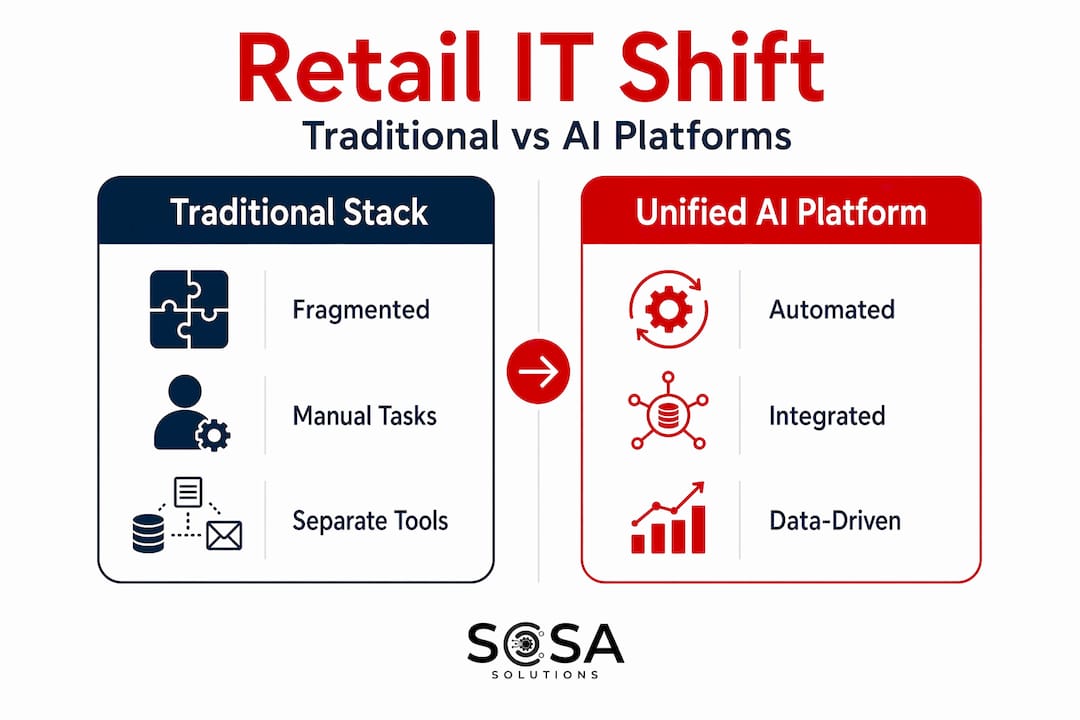
What does this look like practically? Consider a platform that monitors sales data, flags underperforming SKUs, suggests corrective actions, and tracks whether those actions were completed. One system. No manual reporting. No chasing down department heads for updates.
The tools enabling this are also moving faster than most people realize. AI-native platforms now let retailers build workflows and data models in hours instead of months, slashing the traditional barrier between “we want this” and “we have this.”
Pro Tip: Before buying any new retail tech, map out how it connects to your existing systems. A tool that does not share data with your POS or inventory platform will create another island of information, not solve one.
The real opportunity in digital transformation in retail is not buying the flashiest software. It is choosing platforms that talk to each other, surface the right data at the right time, and free your people to act on it.
Integrating legacy systems with modern IT
A common mistake retail leaders make is assuming that modernization means replacement. It often does not.
Many large retailers still run core operations on platforms like IBM AS/400, a system that has been around since the late 1980s. The question is not whether to keep it or dump it. The question is whether it can share data with your modern tools.
Approach | What it means | Outcome |
Full replacement | Rip out legacy system, implement new platform | High cost, high disruption, clean slate |
Integration layer | Connect legacy system via middleware to new tools | Lower cost, faster results, preserved investment |
Hybrid modernization | Gradually migrate functions while maintaining legacy core | Balanced risk, phased improvement |
Costco offers a clear example of why integration often beats replacement. The company integrated IBM AS/400 systems with modern platforms to deliver real-time inventory visibility across 610 US stores. They did not abandon a system that worked. They connected it to one that made it work better.
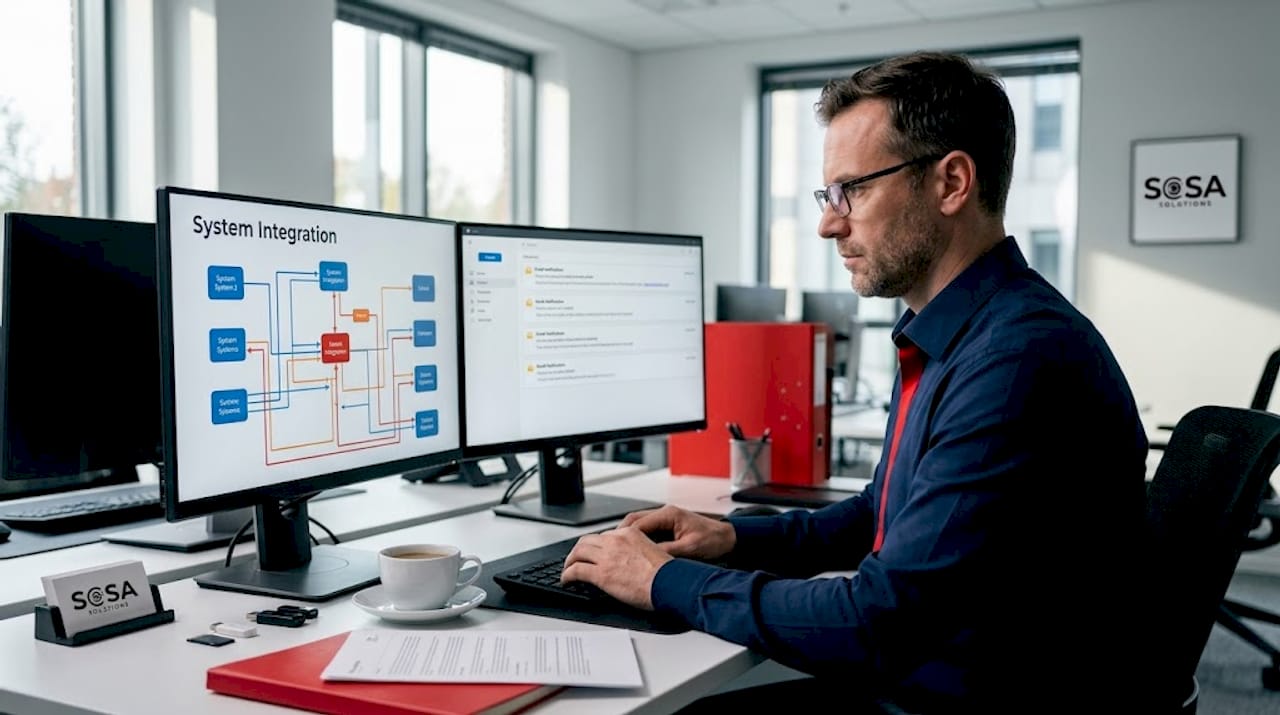
For retail managers, this matters because your legacy systems often hold years of transactional data. That data has predictive value. Losing it to a rushed replacement or walling it off from your new analytics platform is a waste of an asset you already paid for.
Pro Tip: Before any IT modernization project, audit what data lives in your legacy systems and whether your new platform can access it. The integration decision should follow the data, not the other way around.
Strategic IT management and avoiding the fragmentation trap
The biggest risk in retail IT right now is not falling behind on technology. It is buying too much of the wrong technology.
Fragmented retail tech ecosystems obscure data flows and limit AI readiness, which directly hurts your return on investment. When your inventory data lives in one system, your customer data in another, and your financial reporting in a third, none of those systems can deliver the intelligence you need. You end up with dashboards that show you what happened two weeks ago, not what you should do today.
A structured approach to IT governance prevents this. Here is a practical framework retail operations leaders can use:
Map your current technology stack. List every system you use, what data it holds, and whether it shares that data with anything else. Most retail managers are surprised by how many isolated tools they are paying for.
Identify your most expensive data gaps. Where are you making decisions without reliable information? That is where IT investment pays off fastest.
Prioritize a shared architectural foundation. Before adding new tools, ask whether they will connect to what you already have. Retail CIOs risk wasted AI spend when they implement point solutions without visibility into how data flows across the stack.
Set measurable benchmarks before and after. If a new platform cannot improve a metric you track today, you have no way to know whether it is working.
Align IT decisions with operations teams, not just finance. The people who manage your floors often see system gaps before the numbers do.
How IT improves retail is almost always tied to how well your systems share information. Governance is what keeps that sharing intact as your tech stack grows.
Practical steps for retail managers right now
You do not need a complete overhaul to start getting more value from your IT investments. A few targeted moves can create significant operational improvements.
Assess your current IT capabilities honestly. Walk through one week of your operations and note every point where someone is manually moving data, waiting for a report, or working around a system that does not quite do what they need.
Prioritize platforms over point solutions. When evaluating new tools, favor ones that integrate with what you have. A scheduling tool that connects to your POS data is worth far more than one that does not.
Get IT and operations in the same room. Technology decisions made without operations input tend to solve the wrong problems. The best retail operations technology investments come from conversations between both sides.
Measure what changes after every implementation. Track manager time, error rates, stockout frequency, or whatever metric the new tool was supposed to improve. If it is not moving after 90 days, something is wrong with the setup or the choice.
Think about store opening IT readiness early. If you are expanding, the time to get your IT infrastructure right is before the doors open, not after the problems start.
Retail operations technology works best when it is treated as a management discipline, not an IT department project. The operators who understand this gain a structural advantage that compounds over time.
My perspective: IT is not a department, it is a decision
I have worked with enough retail operations leaders to know that the ones who struggle most with technology share one belief: IT is someone else’s job. That mindset makes every system feel like a black box and every investment feel like a gamble.
What I have seen actually work is when operations leaders take ownership of their technology decisions. Not by becoming engineers, but by asking the right questions. What data does this system produce? Who acts on it? How does it connect to what we already use?
The most underestimated opportunity I see in retail right now is the gap between what AI platforms can do and what most managers know to ask for. Retail profitability improvements of 20% are achievable through optimized execution, but only if managers know what levers to pull. The technology exists. The gap is awareness and strategy, not access.
My honest take: retail managers who treat IT as a core competency, rather than a vendor relationship, will set themselves apart in the next three years. Not because technology is magic. Because knowing how to use it is increasingly rare and increasingly valuable.
— Christopher
Ready to put better IT to work in your retail operations?
If this article gave you a clearer picture of where your IT is working and where it is not, the next step is talking to people who specialize in exactly this.
Sosasolutionsnyc provides retail IT support built specifically for the operational demands of retail managers in New York and Florida. From POS setup and network infrastructure to ongoing managed IT services, the team at Sosasolutionsnyc handles the technical side so your people can focus on running the store. Whether you are launching a new location or finally fixing the fragmented systems that have been slowing your team down, managed IT services from Sosasolutionsnyc give you a partner who understands retail, not just IT.
FAQ
What is the role of IT in retail operations?
IT supports retail operations by managing inventory, processing transactions, enabling supply chain visibility, and providing data for better decision-making. Leading retailers treat IT as a foundational business component directly tied to competitiveness, not just a support function.
How does AI improve retail operations?
AI automates repetitive tasks, surfaces actionable data, and consolidates fragmented tools into unified workflows. Studies show unified AI platforms save store managers 4 to 6 hours per week and can improve profitability by 20% through better execution.
Should retail managers replace legacy systems or integrate them?
Integration is often the smarter choice. Costco’s approach of connecting IBM AS/400 systems to modern platforms shows that legacy infrastructure can deliver real-time value without a full replacement.
What happens when retail IT systems are fragmented?
Fragmented systems hide data flows, limit AI readiness, and reduce your return on IT investment. Retail CIOs face wasted AI spend when point solutions operate without architectural visibility across the technology stack.
How quickly can modern AI retail tools be deployed?
Faster than most managers expect. Modern AI-native retail platforms allow retailers to build and deploy data models and workflows in hours rather than months, significantly reducing the time between investment and impact.
Recommended


Comments